Kelly Criterion for Prediction Markets: How Much Should You Bet?
A legendary gambler once said the secret to wealth isn't picking winners — it's knowing how much to bet when you do. Edward Thorp proved this when he used the Kelly Criterion to beat both blackjack and Wall Street, turning mathematical precision into millions. Most prediction market traders focus obsessively on finding edges — spotting mispriced elections, undervalued sports outcomes, overlooked economic indicators. They burn through accounts not because they're wrong about outcomes, but because they bet too much when they're right.Why Position Size Matters More Than Being Right
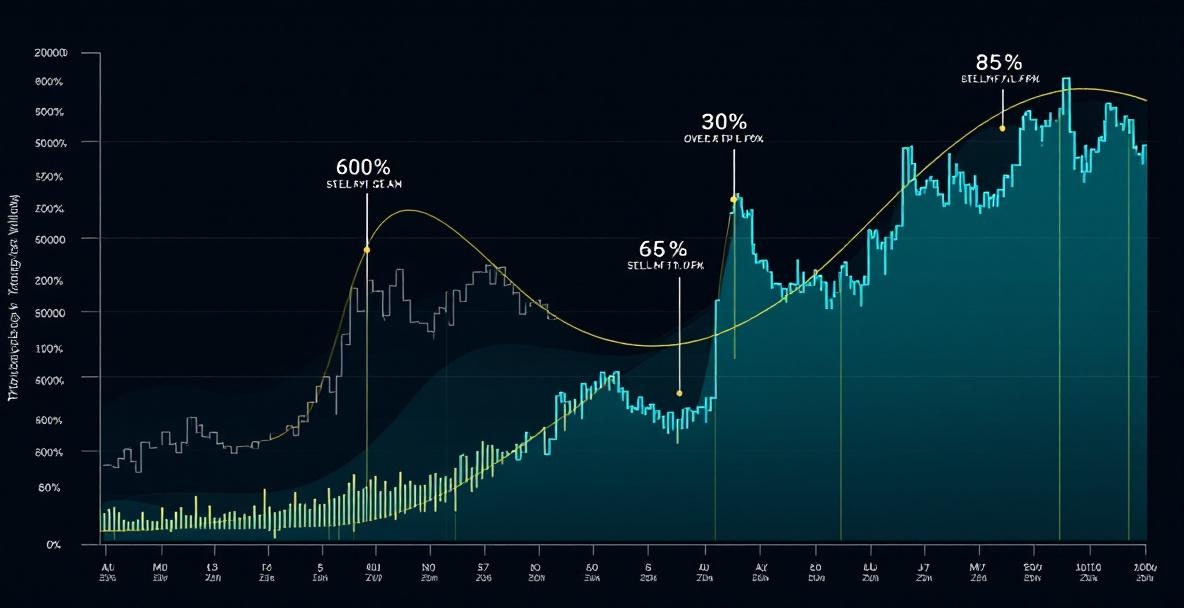
You can be right 70% of the time and still go broke if you bet too aggressively. The math is unforgiving: lose 50% of your bankroll and you need a 100% gain just to break even. Lose 90% and you need 900% returns to recover. Consider two traders on Polymarket during the 2024 election cycle. Sarah finds genuinely mispriced markets — she's right about outcomes 65% of the time. But she bets 30% of her bankroll on each trade. After ten bets, even with her edge, there's a 15% chance she loses more than half her money. Meanwhile, Tom uses the same edge but bets just 8% per trade using Kelly Criterion sizing. His worst-case scenario across ten bets? He's virtually guaranteed to end up ahead. The difference isn't skill at prediction. It's mathematical position sizing that accounts for the inevitable losing streaks that destroy overconfident traders.The Kelly Formula: Math That Saves Your Bankroll
The Kelly Criterion tells you exactly what percentage of your bankroll to bet: f = (bp - q) / b Where: - f = fraction of bankroll to bet - b = odds you're getting (if you win $3 for every $1 bet, b = 3) - p = probability you think you'll win - q = probability you'll lose (1 - p)
Kelly Criterion Quick Check: If your calculated Kelly percentage exceeds 25% of your bankroll, you're either overestimating your edge or the bet is too risky. Consider reducing position size or passing entirely.
Let's break down the intuition. The numerator (bp - q) measures your edge — how much the expected payout exceeds the risk. If this number is negative, Kelly tells you not to bet at all. The denominator (b) adjusts for the odds, reducing position size when you're getting longer odds that create more volatility.
In practice, this means Kelly automatically scales your bets based on both your confidence and the potential reward, preventing you from betting big on low-probability, high-payout scenarios that can wipe you out.
Kelly Criterion in Action: Real Polymarket Examples
Imagine you're trading a Polymarket election outcome priced at 40 cents, but your research suggests the true probability is 55%. Here's how Kelly would size your bet: Your expected odds: if you bet $1 and win, you get $2.50 total ($1.50 profit) - b = 1.5 (profit per dollar bet) - p = 0.55 (your estimated probability) - q = 0.45 (probability you lose) Kelly calculation: f = (1.5 × 0.55 - 0.45) / 1.5 = (0.825 - 0.45) / 1.5 = 0.25 Kelly recommends betting 25% of your bankroll. This feels aggressive — and it is. Pure Kelly sizing assumes you can continuously compound returns and never need to withdraw money.
EdgedUp's probability models help you estimate true probabilities for Kelly calculations across Polymarket and Kalshi markets. Our Polymarket trading guide shows how to spot mispriced markets where Kelly betting creates substantial edges.
Most successful prediction market traders use fractional Kelly — betting 25% to 50% of the full Kelly recommendation. Using half-Kelly in our example means betting 12.5% of your bankroll instead of 25%. You sacrifice some theoretical growth but dramatically reduce the risk of catastrophic losses.
Consider another scenario: a Kalshi weather market where you estimate 70% chance of rain but the market prices it at 50 cents. Your edge is enormous, but Kelly might recommend betting 40% of your bankroll. Even half-Kelly suggests 20% — still aggressive for most traders' comfort levels.